
In the year 2018, two years before the lockdowns from hell, a disposable blockbuster movie called Ready Player One came out. The premise of the movie is that it’s the future and everything sucks. Somehow Columbus, Ohio has devolved into a third world favela like Brazil is, where people live in run down shacks stacked on top of each other. As a result, everyone desires to live their lives in the VR world. In the movie, there’s this VR world called OASIS and technology is at the point where you can feel as if you’re in reality in VR. On top of this, everything has gone the way of Fortnite and VRChat as there’s literally a mishmash of pop culture references everywhere. Of course, the movie was based on an awful novel of the same name that was written by a now-extinct “I love pop culture” Redditor (from a distant era of the site) and as a result the actual plot about a quest for money is really thin.
Yet visually, the movie was able to predict three major things. It predicted the “fortnitification” of media, with random crossovers with other pieces of media that do not fit in the source material. It predicted VRChat, the mishmash of pop culture in that game, and how people will spend literally years in VR worlds to the point of sleeping in VR. But most importantly, the movie predicted a future where people will literally live in rotting living conditions while being blinded by VR.
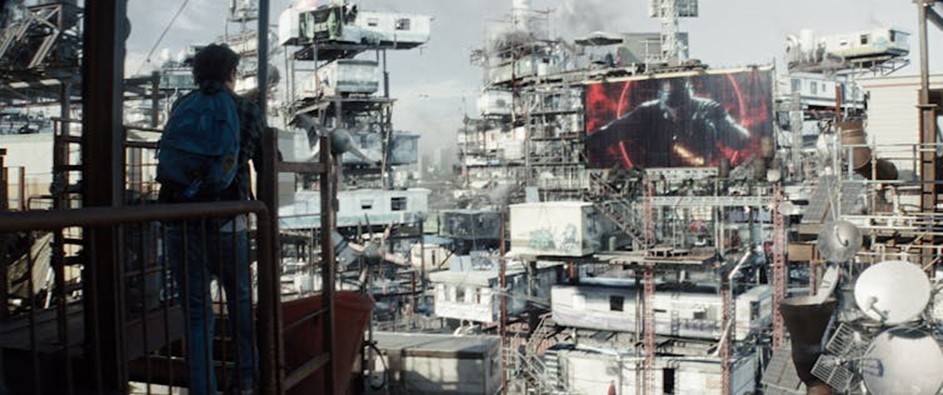
In a way, the set design of the movie and premise were much more fascinating to me than the actual movie, and it’s held up far better than the movie has. When the movie came out, the economy was better and the fancy VR headset of the era was the HTC Vive. In fact, HTC bragged about how it was used during production of the movie. It was a pricey $800 VR headset, and nowadays you can buy a new VR headset for $350 and a used one for $100. But not only that, people are living their lives in a VR Hell.
The real world has become a lot closer to what in 2018 was just an idea for a blockbuster flick you can watch in IMAX. The world sucks, the economy sucks, and people are destroying their lives by living and sleeping in virtual reality. In some cases, they even lose sense of who they are in VR. VR has created the ultimate wirehead, someone who is so plugged into the internet that they block out everything around them to be in it. The worst part is, VR lacks a use case other than escapism.
A quick backstory
To understand how we got here, there needs to be a brief history lesson.
Fiction has often influenced the direction of technology. A tradition among nerds is for one to see a piece of tech from a movie or TV show and think “wow it would be so cool if this was real”, so he would make it his life goal to make this real. Or someone in a tech company would do the same and pitch it to his superiors. Nothing showed this off more than the iconic Galaxy Gear ad which showed a lot of “high-tech” watches from TV shows and movies before the early smartwatch they were marketing. Another infamous example is the Tesla Cybertruck being designed based on the designs of cars from sci-fi movies/anime. VR is another such technology that both influenced and was influenced by media.
VR was something that you’d see in 80s and 90s cyberpunk movies and fiction as the coolest thing ever, to allow you to connect directly into the world of computers, or in media using the cliché of “if you die in the game, you die in real life”. Every nerd had seen movies such as The Lawnmower Man, Johnny Mnemonic, or even Hackers (1995), and seen some VR headset prop of some sort. Look how cool this clip below is, he’s in the wired communicating with people through VR. I’m sure this blew the minds of the nerds watching this back in the day, thinking “wow this is cool”. There were also some really expensive and limited production VR headsets, including some that were used as movie props after impressing Hollywood writers. This was also made during a time period in which there was optimism in tech, in which the computer you bought two years ago was already outclassed by something vastly faster. It’s also the last real era in which sci-fi fiction still had fantastical depictions of the future and tech.
For a while, VR was gimmicky and you’d only see it in high-cost installations, such as the Beach Head 2002 arcade machine. There was no “off the shelf”, low-cost VR headset for sale at a store, that is until 2012’s legendary Oculus Rift kickstarter broke records. The hype train for VR among the nerds would kick off from here on out, and everyone was hyped up about this thing to the point Facebook bought them out. It helped that as opposed to say Google Glass, VR was a product made for nerds by nerds. Afterwards, VR would remain stupidly expensive for two reasons: the GPUs were expensive and the headsets were expensive. When AMD launched the RX480, the entire marketing point at Computex was to brag about how the GPU would make VR cheap. Yet, VR headsets costing $800-1000 kept literally everyone from affording them except for the biggest whales, as in the rich nerds with slick tech jobs who could afford the coolest toys.
After the original VR headsets came out in the 2010s, VR was just an enigma you heard about rich PC gamers with the highest end GPU and “more money than sense” owning in the same way 3d glasses were. Or you’d see funny VR fail compilations in the vein of “Wii Fail” videos. There was also the original PlayStation VR (which cost $400), but it only sold 5 million as opposed to the 100+ million PS4s sold and did not work on the PC. Put it this way, the infamous Xbox 360 Kinect camera sold vastly more.
Then the events of the year 2020 happened which caused a massive shakeup online, with two events standing out in particular. The first was the infamous COVID lockdowns that left millions of people exposed to endless internet access with no time in between the internet and real life. The second was that Facebook released the Quest 2 for $300. The Quest 2 was a cheap, subsidized VR headset that did not require a PC to use. It’s cheap, it has a lot of limitations, and it doesn’t matter because it was a $300 all in one VR package. Nowdays it can be found for half that on eBay. Most VR headsets required you to buy a $800-1000 headset, and then a PC for around the same price to handle the games for it. The Quest 2 was different: it’s an all-in-one package that allowed you to play VR games without a computer. But it gets better: if you buy a PC for gaming later on you can use the Quest 2 as a PC VR headset, wirelessly.
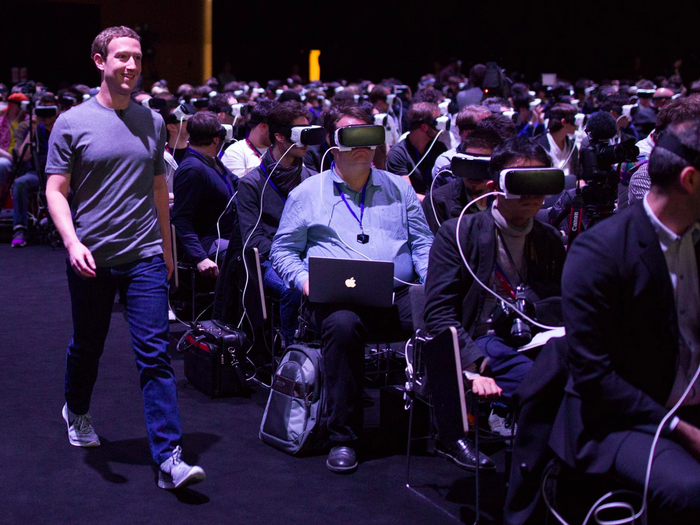
The Quest 2 was a revolution in the VR space by making VR accessible to the world. Anyone and everyone could join in on VR gaming. This was the dream, the goal of many people who watched cyberpunk movies and thought it’d be cool to have in real life. There was some friction at first due to who made it happen, and yet he managed to do what Valve, HTC, Sony, and others had failed to do. His company made a VR headset for the masses.
Yet, the failed social experiment of 2020’s lockdowns also created another vector for the success of the Quest 2. Because of the lockdowns and the massive fear campaign waged by governments and companies (remember the contact tracing apps?), what was left of social spaces were basically destroyed. There are many groups who loved to party and go to social spaces and because of lockdowns, you couldn’t legally do this. Going to illegal ones was a risk as all it took was one idiot on his smartphone to ruin it for everyone, as groups of vigilantes online would rat you out for holding “superspreader events”. The alternative in many of these groups was to do things virtually, from VR raves to VR conventions, all in the world of VRChat. This and the Quest 2 meant that many people who didn’t have VR headsets shelled out money in an attempt to recreate the “good times” in a time when those were banned.
As a result, VRChat managed to do something nothing else had done before, and that was create the final form of the wirehead.
Live in your world, play in ours
VR is at a weird place right now. The VR division of Facebook is a punchline for investors, losing billions of dollars every single quarter. Their own attempt at a VR world (Meta Horizon Worlds or “the metaverse”) has been a giant flop with a YouTuber finding out only 900 people were using it. The gimmicks you see it being used for in the store reels like playing games or doing fitness stuff on it have not quite taken off. In a way it feels as if VR was another fad like the Nintendo Wii was, but without Wii Sports or a similar game to make people buy it. In fact, half of all devs according to some survey consider VR to be in decline and Sony has to deny they’re killing their headset. Sure there’s some cool stuff in VR like Team Beef’s ports of classic FPSes to it, or Rez Infinite, but the elephant in the room is what people use VR for the most. It’s not games, but rather VRChat, a barely regulated chat platform that has some of the biggest wireheads online. There’s also a very good reason why absolutely no VR headset marketing depicts VRChat. It’d be the VR version of beer ads showing people getting blackout drunk and fighting everyone.
VRChat is a special place. It’s a chatroom but with crude (by 2018 standards) 3d graphics that at best, look like a bad PS3 game. Sometimes there are nerds who have made cool things in it, but much of the “gameplay” involves walking around in worlds and talking to real people online; and that’s it. It might as well be a friend simulator mixed with the hellish Garry’s Mod RP server experience. But more importantly, the people on there are absolutely broken by the game. It’s a place where people spend thousands of dollars getting a high-end PC to run the game well, to handle all the unoptimized models that will slow your PC down (and a common wirehead phrase is that “yeah it runs fine, also I have 16GB of VRAM and 64GB of RAM”). It’s a place where people have the social standards of an angry high-school kid who is fixated on drama and dating…while you’re in your 30s. But more importantly, it’s a case study on what happens when a wirehead ends up living in the electronic world…but in real life.
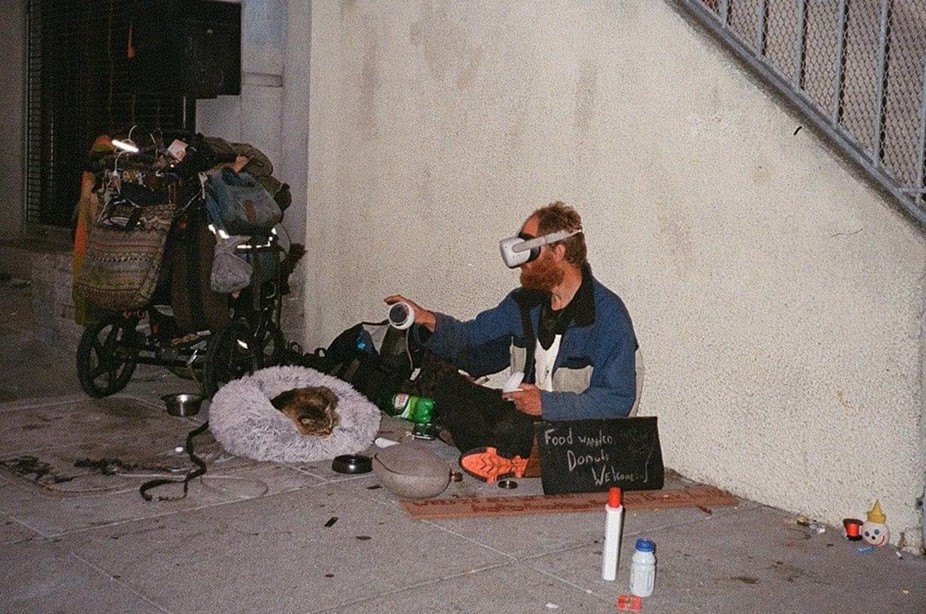
VRChat is a “virtual world” in which people take escapism to the next level. Back in the day, escapism meant turning on the TV and your Xbox 360 to play some Minecraft or Call of Duty to tune yourself out of the drama going on in your house or to forget about school. For a few hours you could be building homes in Minecraft, fragging people in CoD, doing both in Halo, or playing around with your friends in whatever game they wanted. With VRChat, it’s not only about putting on the headset to forget the miserable situation you’re in, but downright dropping out of it. If using a computer or playing video games for hours is unnatural behavior, living as someone you’re not is outright dangerous. You can not only be in the virtual world, but you can outright live in it. Most importantly, you run the risk of losing your sense of self.
It really doesn’t help that VR addicts tend to have miserable IRL lives before getting hooked on VR. I’m talking the social outcast, or the guy who grew up with endless family/school drama, or both. Using VR simply takes it to the next level of escapism. Instead of trying to fix your real life (or if you feel so blackpilled and hopeless), you can just escape into VR and kick the can down the road some. Just ignore the fact you’re living with parents you hate in a housing situation you hate, and that you don’t have a job or future. Just put that headset on, and ignore it all. You’ll come out of the other end having aged years in front of a screen, but in the moment it doesn’t matter.
Hence this is why to an outsider, VRChat is literally an internet zoo of the worst, most broken people on the internet. When you play VRChat long enough, your entire life becomes VRChat. You’ll pick a fictional character, invest months if not years’ worth of hours in VRChat, and you’ll start spending your money on it. By that I mean, buying body trackers, paying people to make a model that’s Literally You (or reskinning one to be such), and slowly watching as your true self vanishes into the void. You are no longer yourself, you are now the e-girl, e-boy, or furry you play on VRChat but in the real world. Maybe one day, you’ll get surgery to be your VRChat self in real life. The mirror will scare you in real life, but thankfully VRChat has a fix. Just turn on the world or personal mirror, and stare at it. You’re no longer Bill, you’re that anime girl you play as. You might even sleep in VR, or play VR in the middle of the day (like how to alcoholics, it’s 5’o clock somewhere). You’ll even 3d print a mirror switch so that you can feel like you’re in your video game. Just be careful, as you won’t be your avatar when you shop at Wal-Mart. It’s guaranteed that you’ll only find miserable people if you play VRChat during a weekday because normal people have jobs or families.
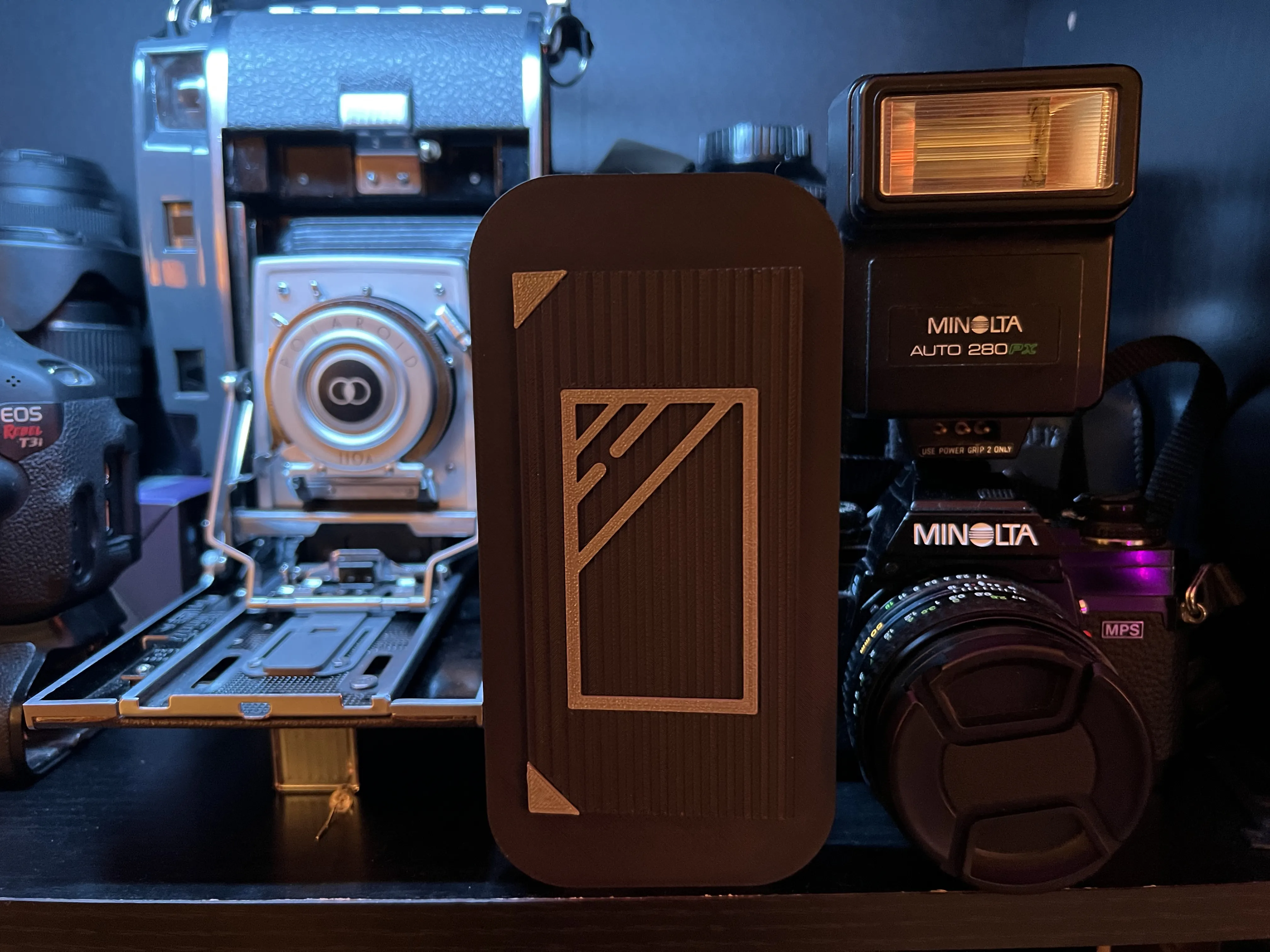
Oh, and I’m not kidding about the mirror dweller part. There are people on VRChat who will stare at the mirror for literal hours. A time lapse of one popular world on VRChat called “Optimized Box” has a mirror on one side, and on the right side of the video you can see people staring for hours. There are even studies that have been done on this craze, and a second one that essentially said that in part, people use it as a sense of immersion to feel as if they are the character they’re playing. The first study also mentioned “Phantom Sense”, a curious phenomenon in which users claim to feel sensation after being in VR for long enough.
What isn’t included in the studies but what I’ve personally noticed is that there is an overlap between these people and the “special” attention seekers on Tumblr back in the day (that you can find on Bluesky/Twitter/Discord nowadays). A lot of people will fake having weird or made up conditions in an attempt to get attention online. From phantom sense to calling yourself a “system” or “plural”, VRChat is full of attention seekers in an attention economy where being “weird” rewards you. In a way, it’s an inverse of the normie world in which pretending to be rich, successful, and attractive nets you attention.
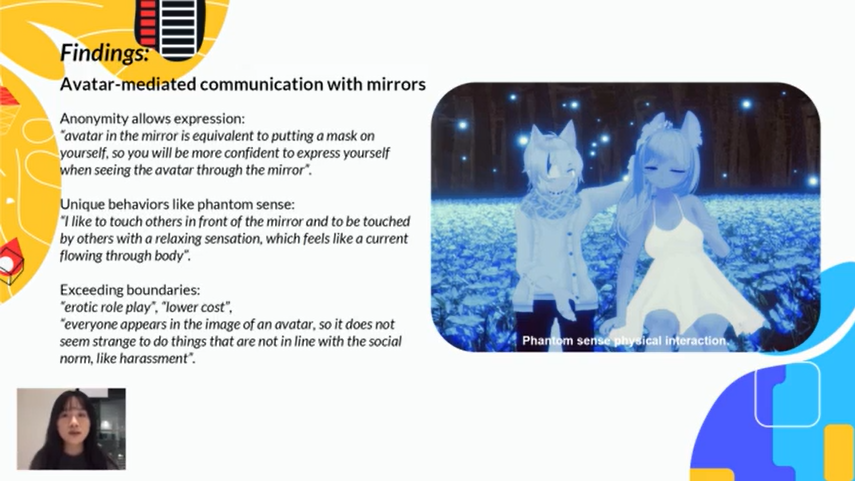
It also affects their social skills and life. Anything on the game is now serious business, and calling someone weird online is somehow a bigger offense than casual usage of racial slurs. When you can kick or ban anyone who slights you, you can also feel like the dictator of your little VR world. On top of that, many people on that game tend to “put on characters” while playing online, and make being an obnoxious unfunny “quirky” personality their identity in game. This is dangerous for your psyche as you can suddenly become that character you play and alienate everyone you know. Then you’ll ask yourself why you’re depressed and have no friends. In a way, VRChat is a reflection of the people who play it and the part of the internet it occupies.
This effect has only cascaded as griefers have found VRChat the easiest place to mess with nerds in an environment where you can’t be yourself online on Call of Duty anymore. Plus, it’s so much funnier when someone who gets worked up over everything on a video game and sees it as his real life is trolled. These videos get views for the same reason people would tune into “trash TV shows” like Jerry Springer or Dr Phil back in the day (or watch IP2/Kick streamers these days), to watch freakshows embarrass themselves. This is especially true when someone claims to have phantom sense, leading to people acting exactly like roleplayers on Garry’s Mod back in the day. The difference is, they have turned into the character they are playing in every sense.
Behind the “internet tough guy” veil these people put up however there is a miserable existence of eating, using the toilet, abusing drugs/alcohol, and playing VRChat. While MMO addiction was bad enough with causing an identity crisis, VRChat is much worse as numerous people want to become their avatar in real life. If the past is anything to go by, this is not going to end well for the wireheads. It’s actually worse than the endless scroll of modern social media apps and “for you” pages, as you can at least pause that and have slightly more situational awareness. I’ve actually seen people change who they are after constantly being addicted to VRChat, or people ditching their entire online presence and hobbies just to hang out online. For some people, it literally is even more dangerous than just social media addiction, as it’s the final frontier. In VRChat, you are in the wirehead dimension. It’s the utopia where anyone who slights anyone gets sent to the RP jail.
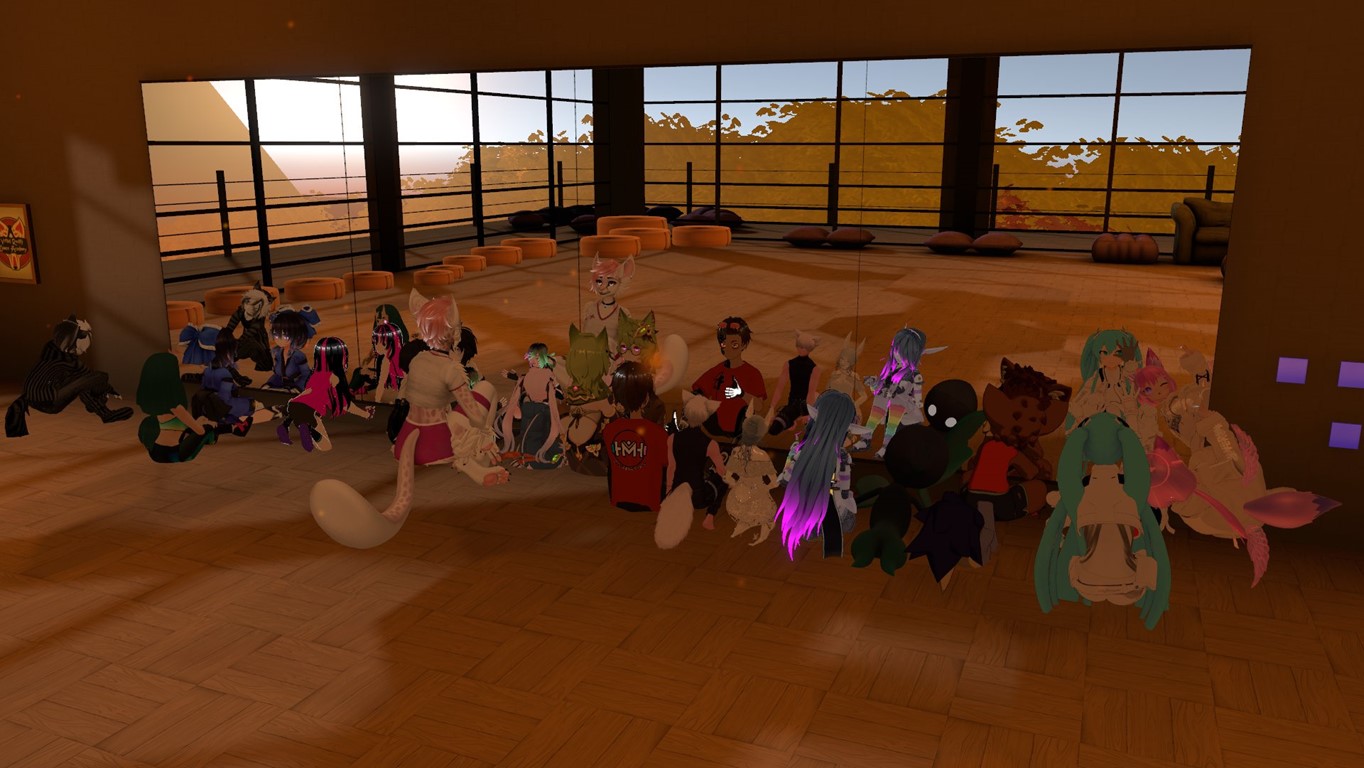
Just look around any big VRChat world, and you’ll see pictures. Pictures that are literally like photos from back in the day of a vacation or party, except it’s all screenshots from VRChat. They’re not of funny moments from the lobby, like some guy throwing a tantrum or of some funny glitch or crazy game moment (like with Xfire/Steam screenshots), but of people using it as a replacement for going outside. There will be ads for overpriced VR body trackers, VR dating apps, and Discord servers. There will be long lists of “no fun allowed rules”, and the same few references to certain groups in VRChat. You’ll learn what terms like Avali, Protogen, and Rexouium mean, you’ll see pronouns, and you’ll just wish the friend you played Halo 3 with back in the day didn’t wreck himself.
Dig deeper and you’ll find VRChat “bars” and worlds where people literally have their headset on while getting drunk/high both in game and in reality. These are some of the most popular places on VRChat, and unsurprisingly they’re unhealthy. There are also virtual strip clubs in the game, and addicts who have turned the game into a sex simulator. The community has done a half-hearted “fix” to this, with some worlds having “bouncers” asking for your age and birthdate when you join. Yet you could just lie and say you were born on 9/11/2001 or something and get right in. While you can show your ID to get “verified”, I’ve heard “rumors” that some kids have managed to fake this as well. On top of this, for the longest time you could NOT make a VRC “world” where you can force all instances of this world to be 18+ (as you could with Second Life) and while some did suggest better content gating, it took governments cracking the whip and pushing age ID laws for VRChat to “do something”. There are also many avatars with “hidden” NSFW features (nicknamed “avatar toggles”), that sometimes end up getting nuked from time to time when the admins find out.
Speaking of that, there are many kids on VRChat as a result of parents buying them this Quest 2 toy they heard about, and not knowing what goes on in it due to the VR aspect keeping it in the eyes of the user and away from concerned parents. Anyone who has any experience online knows just how dangerous it is to let minors around some of the most maladjusted people online as it warps how they view the world. Unsurprisingly, there have been some high-profile cases of predators using VRChat to lure minors. The reviews on the Steam store and Quest store also paint a picture of a platform where abuse runs rampant, and it seems like another day another YouTube video titled “the MOST DANGEROUS VRC PREDATOR” is uploaded.
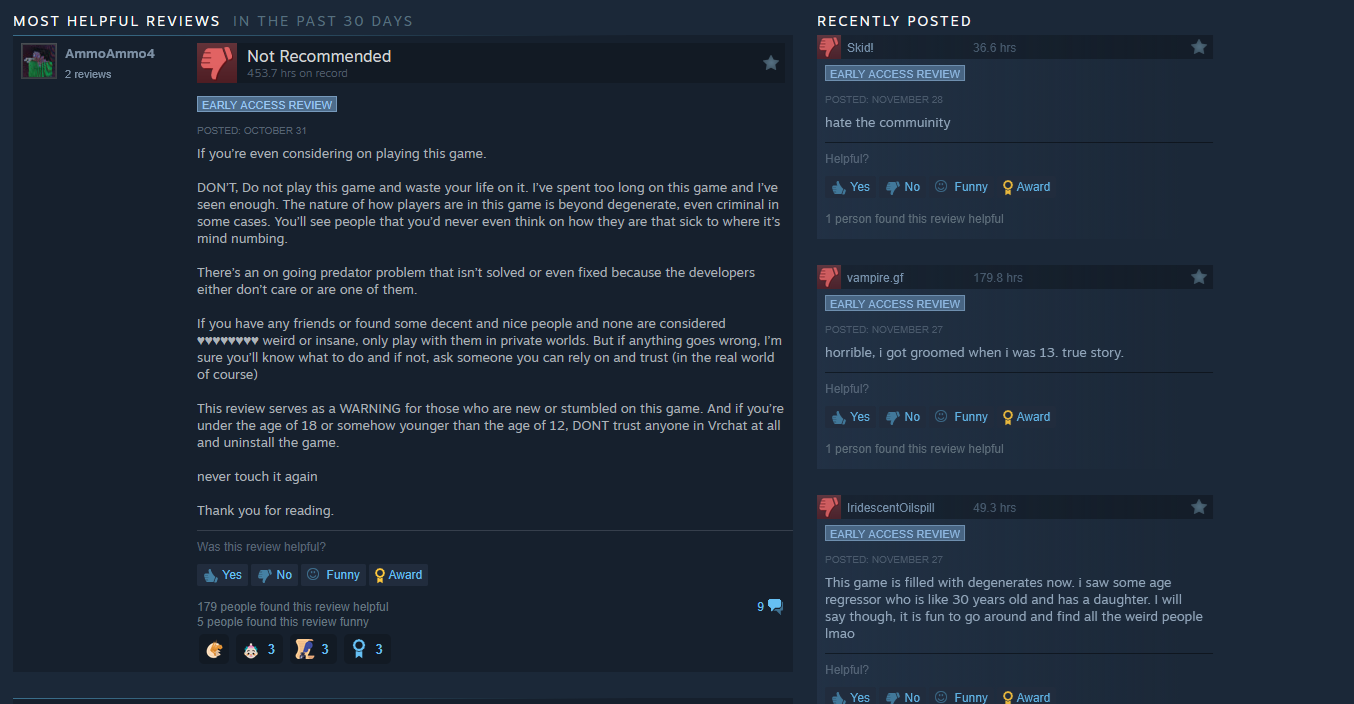
VRChat has proven itself to be a social disease only kept at bay by the fact that many saner people tune out of it or don’t have VR headsets. When you compare the marketing of the game to the reviews, of people talking about how it ruined their lives or the lives of others, there’s a level of deception that even old tobacco/alcohol ads or the online gambling/legal weed industries could never dream of coming close to. The only reason it hasn’t been involved in similar scandals to that of Roblox is because it’s vastly less popular, and only because of that. Yet take the kids out of the platform, and you’re still left with a platform with sad lonely adults destroying their lives in real time. In fact, this is what you’ll find on “virtual worlds” without kids, such as Resonite or Second Life.
In other words, VRChat is exactly the reason why governments keep wanting to crack down on online social media networks.
The use case for VR?
VRChat is a perfect example of why VR was a failure and a mistake, at least in the hands of current developers. There are many tech innovations where they feel as if they were a “solution looking for a problem” or a cool idea that nobody made content for, and VR feels this way. VR right now seems to be mostly associated with gimmicky games from developers making the same mistake Wii/mobile app developers did, “art installations” and gimmicky VR “experiences”, and “VR centers”. Most mainstream games these days don’t even have VR mode or VR options, aside from a few VR ports when the format was newer. In fact, in the 10+ years that “modern” VR headsets have been around there has yet to be anything making people want to buy it other than a hyped-up game and a VR chatroom.
Sony tried to make VR mainstream for gaming and it was a total flop. While Sony is silent on discontinuing the PSVR2, their actions speak otherwise. They sold their patent library to Meta and a few weeks ago it went out of stock as it was removed from the PS Direct store. Microsoft and Nintendo haven’t even thought about anything VR related in the modern sense, and I’m sure Nintendo doesn’t want to make a Virtual Boy 2 that only exists to collect dust with a $500 pricetag at a used game store 10 years later.
The same can be said with Apple, who has no direction with VR other than to “dump out a $3700 headset that can’t even run VRChat and hope someone pays money for it”. Unsurprisingly there’s been layoffs as well. It seems as if the common trend with VR is that it’s a product looking for content, or as seen with the failure of 3d TVs a “solution looking for a problem”.
The low resale value of VR headsets reflects this. You can find Vives, Indexes, older wired Oculus headsets (like the CV1/DK2/S), Quest 2s, and Windows Mixed Reality headsets for a fraction of their original cost. For under $200 (and sometimes half that), you can get the first-generation VR headsets that needed trackers and originally cost a grand. In the right hands, VR had potential to be cool. There’s a certain gimmick in being able to play through Doom 3 in VR, where you’re actually getting to experience the game in first person and fight the enemies as they pop out at you.
The problem is, most VR games are shovelware and the most popular VR game is literally electronic fentanyl. Sure, you might play Half-Life Alyx or Rez Infinite once and be wowed by it, and that’s it. What else is there to do? If you’re not a gamedev looking to make something weird that might not sell well or modding an older game for VR, what is the use case for VR? Even with the super scary component shortage you’re hearing about on the news inflating the prices of hardware, you can still buy a CV1 for little.
The mainstream acceptance and appeal of VR worlds is also questionable as well. Namely, this can be seen with Meta’s Horizon Worlds dropping VR support and going mobile only. VRChat on the other hand is more successful because it managed to cultivate a niche, but outside of nerd circles it is nowhere near mainstream. There are a variety of reasons this is the case and what appeals to one might not appeal to another person, but as a result “hop on VR” isn’t heard as often as “hop on Discord”.
This is why VR is a flop. At best, VR just dotted with gimmicky Wii style games and consultants trying to sell junk to enterprises. At worst, it will literally destroy your life. For even the price of a used VR headsets, you could get a few months at Planet Fitness, take up a real hobby, or put some gas in your car. Just do anything else.

fueling the fight every day of the week